New Delhi : In a bid to strengthen India’s strategic mineral security, the Union Cabinet has approved revised royalty rates for four key minerals — graphite, caesium, rubidium and zirconium. The updated structure is aimed at accelerating domestic extraction and reducing the nation’s dependence on costly imports that fuel high-tech and clean-energy industries.
The move comes at a time when global supply chains remain vulnerable and China continues to dominate the international critical minerals market. By updating the royalty framework, the government seeks to protect India’s long-term mineral requirements and ensure smoother access for emerging sectors such as electric mobility, renewable energy, defence, nuclear power and precision electronics.
One of the most significant reforms relates to graphite. Instead of the previous fixed royalty calculated per tonne, the mineral will now attract an ad valorem levy — a percentage of its average sale price (ASP). High-grade graphite containing 80% or more fixed carbon will carry a 2% royalty, while lower-grade graphite will be taxed at 4%, both linked to the ASP.
For the other three minerals, the Cabinet has introduced straightforward percentage-based rates. Caesium and rubidium will each draw a 2% royalty on the ASP of the metal content in the ore. Zirconium has been assigned a 1% royalty rate based on its ASP.
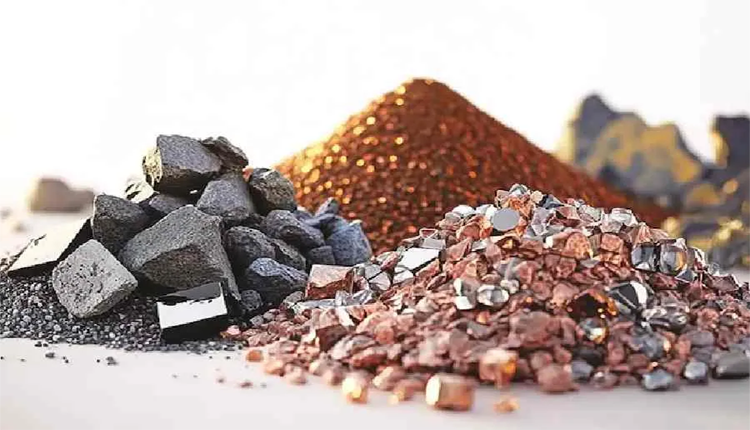
These minerals hold significant strategic importance for modern technologies. Graphite forms the backbone of EV battery manufacturing. Zirconium is a critical component for nuclear reactors because of its corrosion-resistant properties. Caesium plays a vital role in precision electronics such as GPS systems and atomic clocks, while rubidium is essential for fibre-optic glass and night-vision technology.
According to the government, the revised royalty structure will make it more attractive for states and private players to put new mineral blocks up for auction. This push is likely to pave the way for exploration and extraction not just of these four minerals, but also of associated resources like lithium, tungsten and rare earth elements (REEs), giving a major boost to India’s ambitions of becoming self-reliant in critical mineral supply.